The Power of Storytelling

Ever wonder why a good story pulls you in and leaves you wanting more?

Stories have always been a huge part of my life. I’m pretty sure my craving for a good yarn started before I could walk.  My father was an amazing storyteller. He filled every sentence with juicy details and suspenseful moments that evoked awe and anticipation. Then he delivered each conclusion with warmth and authority. He told anecdotes from his childhood, recited poems by heart, and thrilled us with classic children’s fables. When he reached for a book on the shelf, my heart would race, and I’d hold my breath, waiting for the story to begin.

As soon as I could read on my own, I made friends with the librarians who delighted in helping me find my next new adventure. Racing on my bike to the library for my treasure hunt, I would stuff my basket to the brim with books and pedal furiously home. Opening them, I’d breathe in the mystery of where the paper and ink would transport me.  Then it was time to cozy into just the right chair or secret nook and let the magic sweep me away. I often passed up playing with the kids outside, just to return to the wonderful world the book was creating. I sucked in those stories like lifesaving breaths.

Why did I like it so much? Why do humans crave this?

Turns out those childhood moments weren’t just magical—they tapped into something deeper: the biology of our brains.

Storytelling has been embedded in every human culture since the beginning of time. Throughout human evolution, stories were more than entertainment—they were survival tools. Our ancestors used narratives to share critical knowledge about overcoming threats, solving problems, and adapting to challenges. They didn’t have how-to manuals or search engines; they had oral traditions. These stories became the foundation of communities and culture, teaching future generations how to cope, how to triumph, and how to progress. That’s why even today, we expect every good story to have conflict, a turning point, and closure—our brains are built for it.

Humans have always been wired for stories. Storytelling is deeply ingrained in our biology. When we hear a story, multiple parts of our brain engage to help us remember, shape how we feel, and even influence the choices we make. From fireside chats thousands of years ago to TikTok videos today, stories remain one of the most powerful tools we have for connecting and learning.

Neuroscience researchers have shown that storytelling is the best way to capture people’s attention, imprint information into their memories, and resonate emotionally with them. The human brain is programmed to crave, seek out, and respond to well-crafted narrative—that’ll never change.

But why do we love a good story? What happens in the brain when we hear or read a compelling narrative?

When you dive into a story—whether you’re hearing it or reading it—your brain starts syncing up with the storyteller’s. Scientists call this “neural coupling,” but you might know it as “mirroring.” Research shows this isn’t just happening in one spot—it lights up multiple areas of your brain. And here’s the fun part: as you anticipate how the story will end, your brain rewards you with a hit of dopamine.

But that’s not all. The way a story paints pictures in your mind matters—a lot. The more vivid and detailed the imagery, the harder your brain works to bring it to life. That’s when the amygdala—a tiny bean-shaped control center tucked deep inside your brain—steps in. Its main job? Handling emotions, especially the big ones like fear, excitement, and stress. Think of it as your brain’s “emotional radar,” scanning for anything that feels important and tagging those moments, so you remember them. When something hits hard emotionally, the amygdala makes sure those moments are unforgettable.

And when you’re really into it? Your brain starts releasing oxytocin, the “connection” chemical, which makes you feel closer to the characters—sometimes closer than to real people.

With the combination of oxytocin, dopamine, and cortisol—the stress hormone that keeps you alert—you hang on every twist and turn. Suddenly, you’re hooked. That’s why we tell ourselves “just one more chapter” and end up reading or binge-watching into the wee hours when we should be catching that much-needed shut-eye instead.

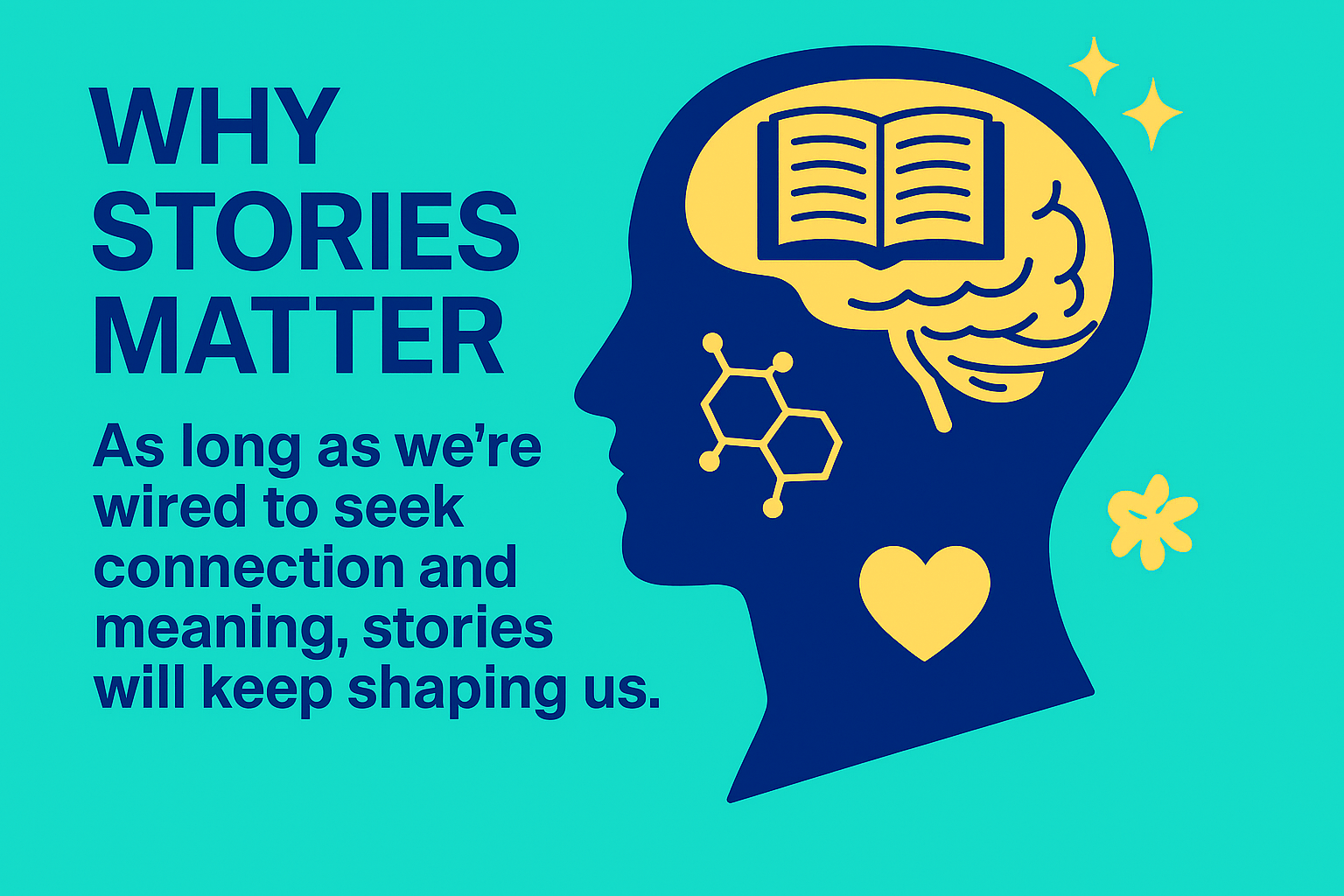
That’s the biological power behind stories, and why cultures have relied on them for millennia. As long as we’re wired to seek connection and meaning, stories will keep shaping us—feeding our brains, sparking creativity, and changing the way we see the world.

So next time you give in to the guilty pleasure of escaping into a great story while chores pile up, remember—it’s not weakness, it’s biology.


Flawless Execution: 5 Keys to Success

It has long been my belief that great ideas are only as good as their execution.

You have seen it before. Bright new ideas conceived by equally bright people. But due to a lack of knowledge on how to get started, or simply a lack of resources, these ideas are not brought to fruition. And instead of a new idea making a solid change in their business, it languishes in a half-formed plan or a pretty PowerPoint–never to see the light of day. Execution can be daunting, and often the highly visionary and the extremely busy want to simply run from the thought. But execution can really be boiled down to just five keys, and when properly followed success is almost always the result.

1. SCOPE

Do you truly understand the scope of the project/idea you are about to undertake? Take some time to sketch out the entire concept. Look at it from all angles. What else will it entail? How will it relate or interact with your other initiatives? Do you have the time, people and money resources to make it happen? Play the devil’s advocate–why might it not work? What could go wrong (did you check for copyrights or necessary permits for example)? What obstacles need to be overcome? Who needs to approve it? Who needs to buy-in? Think of every contingency you can and have a plan to tackle it. Be painfully realistic here, but don’t get negative. If the idea is a good one, there is always a way to get it done!

2. STEPS

Now that you understand what has to be done, it is time to break it down into chronological, specific and assignable steps. I find it helpful to place these steps under organized “buckets”. For example: venue, contract, advertising, volunteers, etc. Underneath each “bucket” list every step needed and who will get it done. Knowing who will be assigned is crucial, because then the plan can be pulled apart and each team member will have their own list of tasks. Using a project management program such as Basecamp, Asana and others is great, but an Excel spread sheet can also do the trick. The main point is to be sure you have the ability to sort by bucket, team member, due date, etc.

3. TIMELINE

Since you have already put all of the steps into chronological order, creating a timeline should be a snap! Assign due dates (thinking through how long it will realistically take to do each task) working BACKWARDS from your final due date. This ensures you start in plenty of time to complete the project on time. If you go through this process and discover you needed to start three weeks ago, don’t despair! Look at each step and see if any can be eliminated, if the timing can be shortened, or if there is an alternative step or way to get it done that will be quicker. Do you really need a paper invite? Can you ask your printer for a rush job? Can your writer work through the weekend? Can you put more team members on a task to speed it along? Make your adjustments and then stick to your timeline religiously.

4. BUDGET

Now you see your project can be done, done well, and done on time. But chances are that your project, including a budget, needs approval by someone. Even if that someone is you. Make another column in your step-by-step plan and assign any and all costs associated with each step. Get necessary bids early to avoid surprises. And keep an eye out for hidden costs. Add it all up and make a projected ROI based on your anticipated results. Is it worth it? Will your approvers agree? Now is the time to make necessary adjustments to keep your vision affordable.

5. MEASUREMENT

You have now put quite a bit of effort into making your great idea come to fruition. Take a moment to savor the accomplishment. Things went flawlessly, looked great, and were well received. Success, right? But how will you know if it was really a success? Your plan should have KPIs baked right into it so you can measure, and show others, your proven accomplishment. Put all this into some great graphs and charts to illustrate your success and get ready to do it all again!

Jennifer L. Park is a CEO, entreprenuer, senior leader and multi-decade veteran in the communications, marketing, and higher education fields. Park has helped companies such as the University of Denver, University of Colorado, Procter & Gamble, Kellogg, Eastman Kodak, Kimberly-Clark and Frito-Lay, achieve their communication, brand and revenue goals.

Cure your team of the idea hangover

By Jennifer Park

We all face problems and challenges in our business. Too often we approach those really tough issues (the BGP’s—Big Gnarly Problems) in the same tired manner that we approach those that are easy to solve. But developing new solutions at work is a real puzzle that can confound even the best teams. When faced with problem-solving in the workplace, do you and your team tend to turn to the same old answers? Are you noticing your team drinking in the sweet yet toxic “because we have always done it that way” cocktail far too often? When the same old hum-drum ideas continuously resurface, I call this the “idea hangover.” If your team is losing creative steam, try the proven cure of supercharging some innovation in your workplace. Tough questions require true innovation. Take steps to wake the sleeping creativity giant.

“Problems are nothing but wake-up calls for creativity”

– Gerhard Gschwandtner

One great way to supercharge some innovation is bringing the team together for a good old-fashioned brainstorm. A well-run brainstorm may be the best tonic for idea hangovers ever created, but don’t be lulled into thinking this is something that can be done on the fly. An effective, truly imaginative brainstorm is far from simply throwing a few flip charts up around the room and asking for ideas. Planned correctly, your brainstorm session can bring out authentically creative ideas and help you break the mold in problem-solving. The added benefits? Building team comradery, inspiring a shared vision as the team works together and increasing overall employee satisfaction and productivity (because if done right, brainstorms can be downright fun.)

Problem-solving leaders have one thing in common: a faith that there’s always a better way.”

– Gerald M. Weinberg

So, how can you lead your team in discovering that “better way” to solve your BGP’s?

Include these six simple ingredients in your next brainstorm and whip up some new answers to old problems.

1. In It To Win It

Don’t approach the brainstorm halfheartedly. Your attitude will be apparent to the team you assemble. Take an enthusiastic, open-minded approach and others will follow suit. You need to truly believe new ideas will be the result and be open to hearing those ideas. Set this concept out from the beginning and ask for only the truly committed to stay and participate.

2. Diversity Leads to Creativity

Don’t keep your invitee list to your usual suspects. Great ideas can come from anyone, in any function. While taking care to not let the group get too big, do extend an invitation to a variety of coworkers, at various levels within the organization and from across a multitude of functions. The fresh perspective from finance or HR might just be the breakthrough idea you have been waiting for!

3. Engage All Five Senses

Incorporating thought-provoking activities in brainstorms can really get the ball rolling. Next time you all sit down together, try invoking all the senses. Play some inspiring music at well-timed intervals. Let some aromatherapy open the mind—try some specifically for energy or focus. Ply your team with whimsical, sugary treats that evoke memories of childhood when creativity ran rampant. Hand out kinetic sand and pipe cleaners so the team can keep their hands busy while their minds race for new heights. And be sure to make the whole process as visually appealing as possible, including capturing ideas using bright, fun colored paper and markers.

4. The Golden Rule

No idea is a bad idea in a brainstorm. That has to be the golden rule the entire group follows. Every idea should be given credibility and captured. So often I have seen the really terrible idea get picked up by someone else, turned on its head and suddenly…brilliance! Brainstorms should allow for interweaving the best of all thoughts, and we won’t know what those are if we allow ideas to be stifled.

 “Instead of thinking out of the box, get rid of the box.”

– Deepak Chopra

5. Capture Everything

See above. That outlandish, impossible idea from Dina in customer service might just be the seed to an entirely new product line. But if you don’t write it down, you can’t riff off of it later. Good notes will be invaluable to all of the participants to reference at later times. The challenge you tried to answer that morning may just be followed by a similar one the next afternoon. Good notes will allow you and your team to see if the answer to the next BGP has already been discovered.

6. Follow Through is King

You took up a lot of people’s time, had a great creative session and had some fun to boot. But what is the next step? Make sure the brainstorm has a “so what” and follow up with everyone who contributed. Send out the notes, highlight the key takeaways, identify the potential solutions and be crystal clear about next steps and who will be accountable. And then circle back around after you have implemented the solution and share the success!

According to Forbes, of CEO’s polled, 60% agreed that creativity was the most important skill to have in a leadership role.

Forbes

The bottom line? Forcing down too many of the same old tired solutions is sure to lead to Idea Hangover. Creativity is key to problem solving, and problem solving is key to business success. Take steps to make sure you and your team can excel in this area. It will help all of you excel in your careers.

Jennifer L. Park is a CEO, entrepreneur, senior leader and multi-decade veteran in the communications, marketing, and higher education fields. Park has helped companies such as the University of Denver, University of Colorado, Procter & Gamble, Kellogg, Eastman Kodak, Kimberly-Clark and Frito-Lay, achieve their communication, brand and revenue goals.